
In the fabrication and engineering industry, terms like MS Plate, Mild Steel, and Iron Plate are often used interchangeably. While many people use them to refer to the same material, understanding the actual meaning behind these terms helps manufacturers and fabricators make better decisions when sourcing steel for industrial projects. Let’s break down the difference clearly. What is Mild Steel? Mild steel is a low-carbon steel containing a small percentage of carbon, generally between 0.05% and 0.25%. Because of its composition, mild steel offers: Good strength Excellent weldability Easy machinability Cost-effective pricing This makes it one of the most commonly used materials in: Industrial fabrication Machine manufacturing Structural steel work Heavy engineering What is an MS Plate? MS Plate stands for Mild Steel Plate. This simply refers to a flat plate manufactured using mild steel material. So: MS Plate = Mild Steel Plate These plates are widely used in: Machine base frames Structural supports Heavy fabrication components CNC profile cutting applications What is an Iron Plate? In many local markets, people use the term Iron Plate casually when referring to steel plates. However, in technical terms: Most industrial “iron plates” are actually mild steel plates. Pure iron is rarely used in fabrication because: It is softer Less strong than steel Not suitable for most industrial structural applications So in practical engineering usage: “Iron Plate” usually means Mild Steel Plate. Why Mild Steel Plates Are Preferred in Industry Mild steel plates are highly preferred because they offer the right balance of: Strength Strong enough for most structural and machine applications. Workability Easy to cut, bend, drill, and fabricate. Weldability Can be welded efficiently without complex procedures. Affordability Lower cost compared to alloy and specialty steels. Why MS Plates Are Ideal for CNC Flame Cutting Mild steel plates are one of the best materials for CNC flame cutting because they: Cut cleanly under oxy-fuel flame Maintain structural integrity after cutting Are available in thick sections Support complex profile cutting This makes them ideal for: Heavy machine parts Structural plates Fabrication profiles Industrial equipment components Common Thicknesses Used in Industry Typical mild steel plate thicknesses used for CNC cutting include: 6 mm 10 mm 12 mm 20 mm 25 mm 40 mm 50 mm and above Thicker plates are often used in: Crusher machinery Mining equipment Structural fabrication Machine frames Conclusion Although the terms MS Plate, Mild Steel, and Iron Plate are commonly used together, the important point is: In most industrial applications, they refer to mild steel-based steel plates used for fabrication and machining. Understanding this terminology helps avoid confusion when ordering material or CNC cutting services. Call to Action Need precision CNC flame cutting for MS plates? Dhanam CNC Flame Cutting & Fabrication provides accurate profile cutting for mild steel plates used in heavy engineering, machinery manufacturing, and fabrication projects. Contact us today for reliable CNC cutting support.


This is your website preview.
Currently it only shows your basic business info. Start adding relevant business details such as description, images and products or services to gain your customers attention by using Boost 360 android app / iOS App / web portal.
MS Plate vs Mild Steel vs Iron Plate – Understanding the Difference
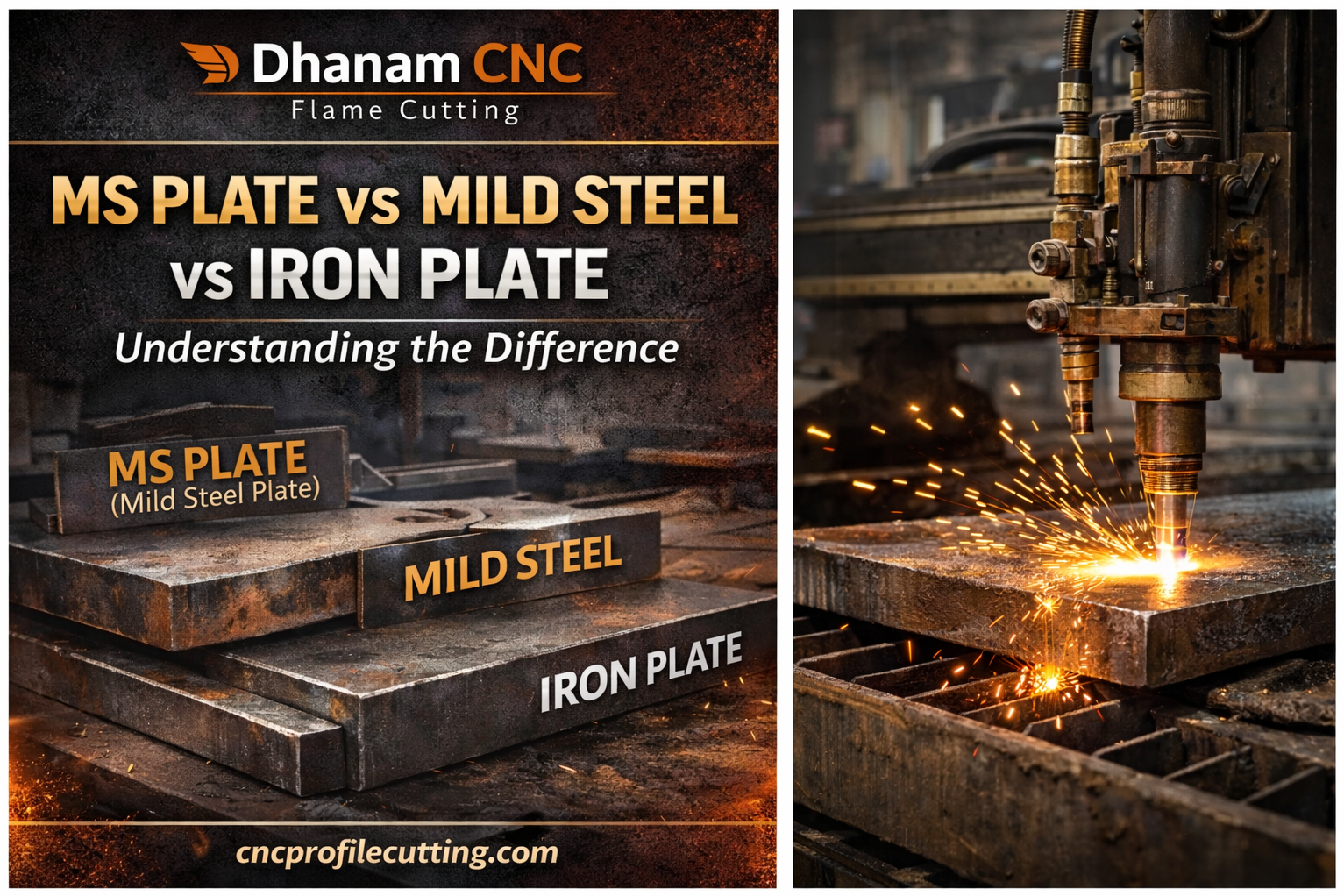
2026-04-13T05:18:13
In the fabrication and engineering industry, terms like MS Plate, Mild Steel, and Iron Plate are often used interchangeably. While many people use them to refer to the same material, understanding the actual meaning behind these terms helps manufacturers and fabricators make better decisions when sourcing steel for industrial projects. Let’s break down the difference clearly. What is Mild Steel? Mild steel is a low-carbon steel containing a small percentage of carbon, generally between 0.05% and 0.25%. Because of its composition, mild steel offers: Good strength Excellent weldability Easy machinability Cost-effective pricing This makes it one of the most commonly used materials in: Industrial fabrication Machine manufacturing Structural steel work Heavy engineering What is an MS Plate? MS Plate stands for Mild Steel Plate. This simply refers to a flat plate manufactured using mild steel material. So: MS Plate = Mild Steel Plate These plates are widely used in: Machine base frames Structural supports Heavy fabrication components CNC profile cutting applications What is an Iron Plate? In many local markets, people use the term Iron Plate casually when referring to steel plates. However, in technical terms: Most industrial “iron plates” are actually mild steel plates. Pure iron is rarely used in fabrication because: It is softer Less strong than steel Not suitable for most industrial structural applications So in practical engineering usage: “Iron Plate” usually means Mild Steel Plate. Why Mild Steel Plates Are Preferred in Industry Mild steel plates are highly preferred because they offer the right balance of: Strength Strong enough for most structural and machine applications. Workability Easy to cut, bend, drill, and fabricate. Weldability Can be welded efficiently without complex procedures. Affordability Lower cost compared to alloy and specialty steels. Why MS Plates Are Ideal for CNC Flame Cutting Mild steel plates are one of the best materials for CNC flame cutting because they: Cut cleanly under oxy-fuel flame Maintain structural integrity after cutting Are available in thick sections Support complex profile cutting This makes them ideal for: Heavy machine parts Structural plates Fabrication profiles Industrial equipment components Common Thicknesses Used in Industry Typical mild steel plate thicknesses used for CNC cutting include: 6 mm 10 mm 12 mm 20 mm 25 mm 40 mm 50 mm and above Thicker plates are often used in: Crusher machinery Mining equipment Structural fabrication Machine frames Conclusion Although the terms MS Plate, Mild Steel, and Iron Plate are commonly used together, the important point is: In most industrial applications, they refer to mild steel-based steel plates used for fabrication and machining. Understanding this terminology helps avoid confusion when ordering material or CNC cutting services. Call to Action Need precision CNC flame cutting for MS plates? Dhanam CNC Flame Cutting & Fabrication provides accurate profile cutting for mild steel plates used in heavy engineering, machinery manufacturing, and fabrication projects. Contact us today for reliable CNC cutting support.
2026-04-13T05:18:13


Submit Your Enquiry